
Weekly descaling
Sinks, taps, chrome work and toilet bowls descaled on a fixed day. Scale is the difference between a washroom that is clean and one that looks clean.
Washroom services
Washrooms generate more complaints than every other area combined, and they are the area where "nearly clean" is most obvious. Acies treats them as a controlled process rather than the last job of the shift.
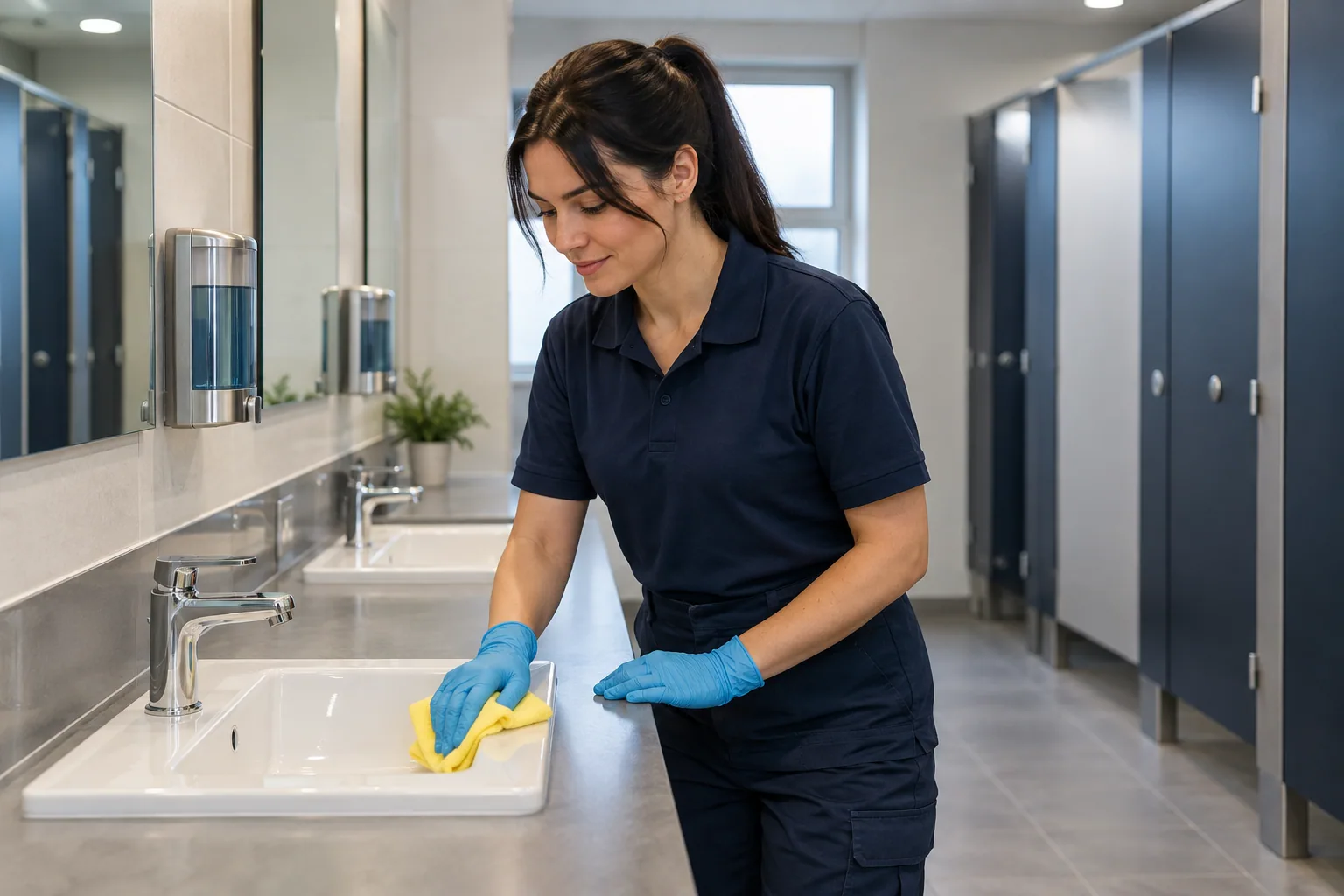
Daily
Washroom cleaning done in the wrong order moves contamination around rather than removing it. The sequence below is fixed, and it is the reason equipment for the dirtiest areas never touches anything else.
This is rule five ofthe Acies Method — cleanest to dirtiest — applied to the room where it matters most.
Beyond the daily clean
A washroom rarely fails suddenly. It declines over months as scale builds, grout darkens and a faint smell becomes normal. That is scheduled work, not extra work.

Consumables
Running out is a planning failure, not an event. Stock levels are checked as part of the daily walkthrough and ordered against usage, so the first you hear of it is not someone standing at an empty dispenser.
Where you would rather buy your own consumables, Acies will work to your supply and tell you what is running low. Where you would rather not think about it, we manage the ordering. Both are normal; it is agreed at survey and written into the site plan.
The standard
Acies specifies the result rather than the activity. "Mopped the floor" is an activity and proves nothing. The table below is what both sides measure against at an inspection — including what is reasonable to see between cleans, because a building in use is not a photograph.
| Area | Acceptable on completion | Acceptable between cleans | Unacceptable |
|---|---|---|---|
| Hard floors | Dry, uniform in appearance, and free from spillages, removable stains, superficial marks and loose debris. | Debris and spillages arising from normal use since the last clean. | Build-up of spillages, removable stains, scuff marks or debris. A non-uniform finish. |
| Soft floors | Free from visible loose debris, dust, fluff and lint, with an overall even appearance. | Debris arising from normal use since the last clean. | Build-up of debris, dust or lint, particularly around edges and the bases of furniture. |
| Vertical and high-level surfaces | Free from impacted debris, dust, cobwebs and removable marks. | Dust and marks arising from normal use since the last clean. | Build-up of dust or impacted debris, especially where vertical surfaces meet horizontal ones. |
| Furniture, fixtures and fittings | Dry, uniform in appearance, and free from impacted debris, dust, cobwebs and removable stains. | Debris, dust and marks arising from normal use since the last clean. | Build-up of dust or impacted debris. Removable stains and smears. |
| Sanitary fittings | Dry, odour free, uniform in appearance, and free from impacted debris, removable stains, scale and body fats. | Debris and residual odour arising from normal use since the last clean. | Build-up of impacted debris, fats or scale on any surface. Removable stains and smears. |
A site survey covers how many washrooms you have, how hard they are used and what is currently going wrong. You get a written plan with frequencies either way.