
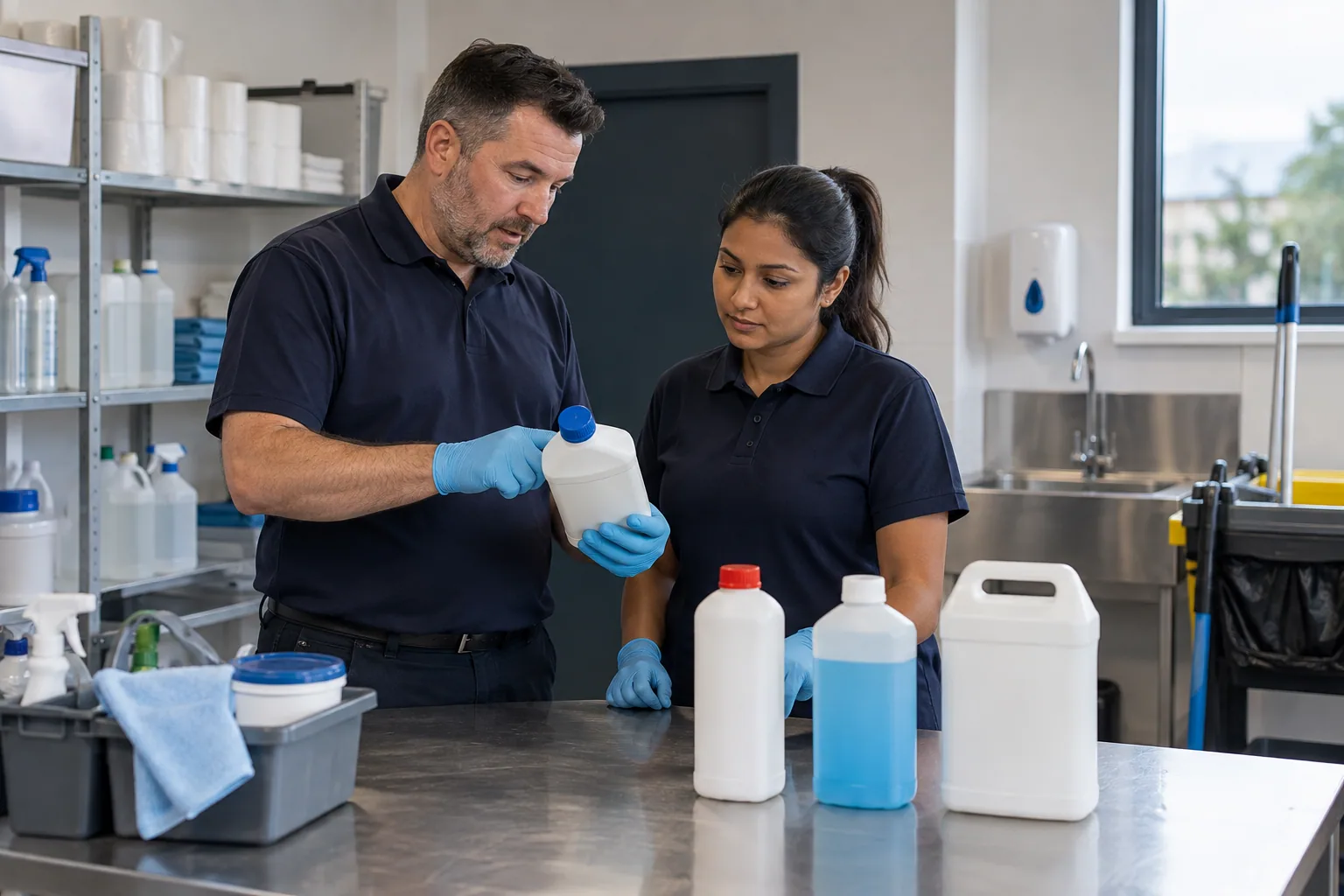
Chemicals
What each product is for, how it is diluted, what it must not be mixed with, and what the label actually requires. Product labels stay intact and procedures are followed as written.
The Acies Method
Two cleaners given the same room and the same hour will produce two different results — unless they are working to the same method. The Acies Speed Cleaning Method is the fixed order of work that makes one team's output look like another's.
It is not a productivity trick. It is what turns a written specification into a consistent result on a Tuesday in March and a Friday in November.
The eight rules
Every Acies cleaner works to these eight rules on every site. The rule is the instruction; the paragraph underneath is what it buys you.
Before anything is cleaned, the team checks what needs to be safe: wet-floor signage, access, and how the building is left. Cleaning usually happens when nobody else is there, so how a site is closed down matters as much as how it is cleaned.
A cleaner who does one task across a whole floor works faster and more evenly than one who does everything room by room. It is also why standards do not drift between the first room of a shift and the last.
Dust falls. Working downwards means nothing lands on a surface that has already been cleaned, so the floor is not being redone because somebody wiped a shelf afterwards.
A fixed direction around a room is what stops a corner being missed. It is the difference between a room that was cleaned and a room that was systematically covered.
Order of work is a hygiene control. Moving from the cleanest areas to the dirtiest, with separate equipment for the dirtiest, is how cross-contamination between a washroom and a kitchen is avoided.
The correct cloth, the correct dilution, the correct machine. Using the wrong product on a surface does damage that outlasts any saving, and it is the most common cause of an avoidable repair bill.
Wasted movement is time not spent cleaning. Planning the route through a space means more of the hours you pay for land on the work itself.
The plan defines what finished looks like. Without that, one area gets polished repeatedly while another gets nothing — which is how a building ends up with a spotless reception and a neglected third floor.
Level 1 training
A method only works if the person following it knows what they are handling. Level 1 covers three things before anyone works unsupervised on your site.
What each product is for, how it is diluted, what it must not be mixed with, and what the label actually requires. Product labels stay intact and procedures are followed as written.
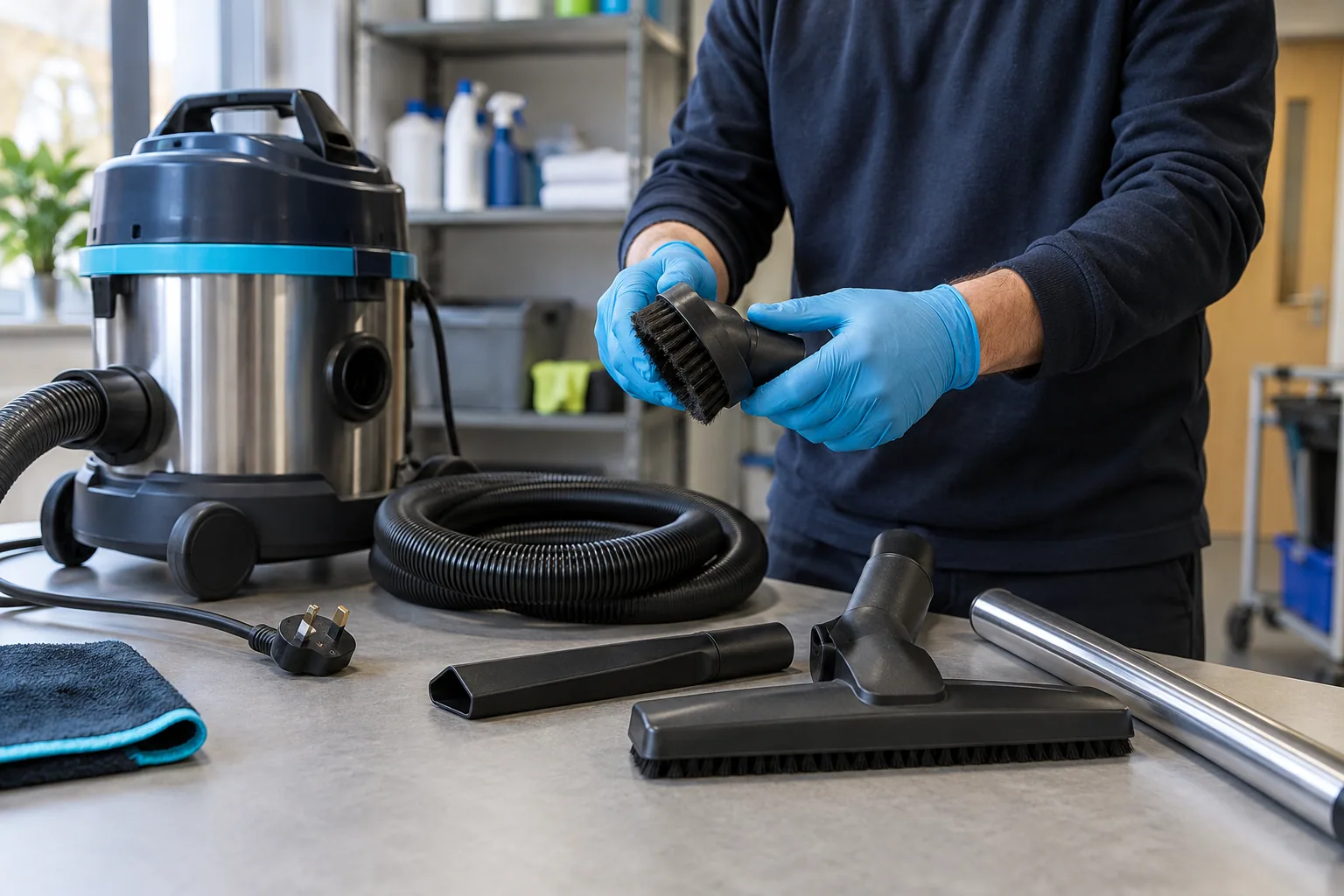
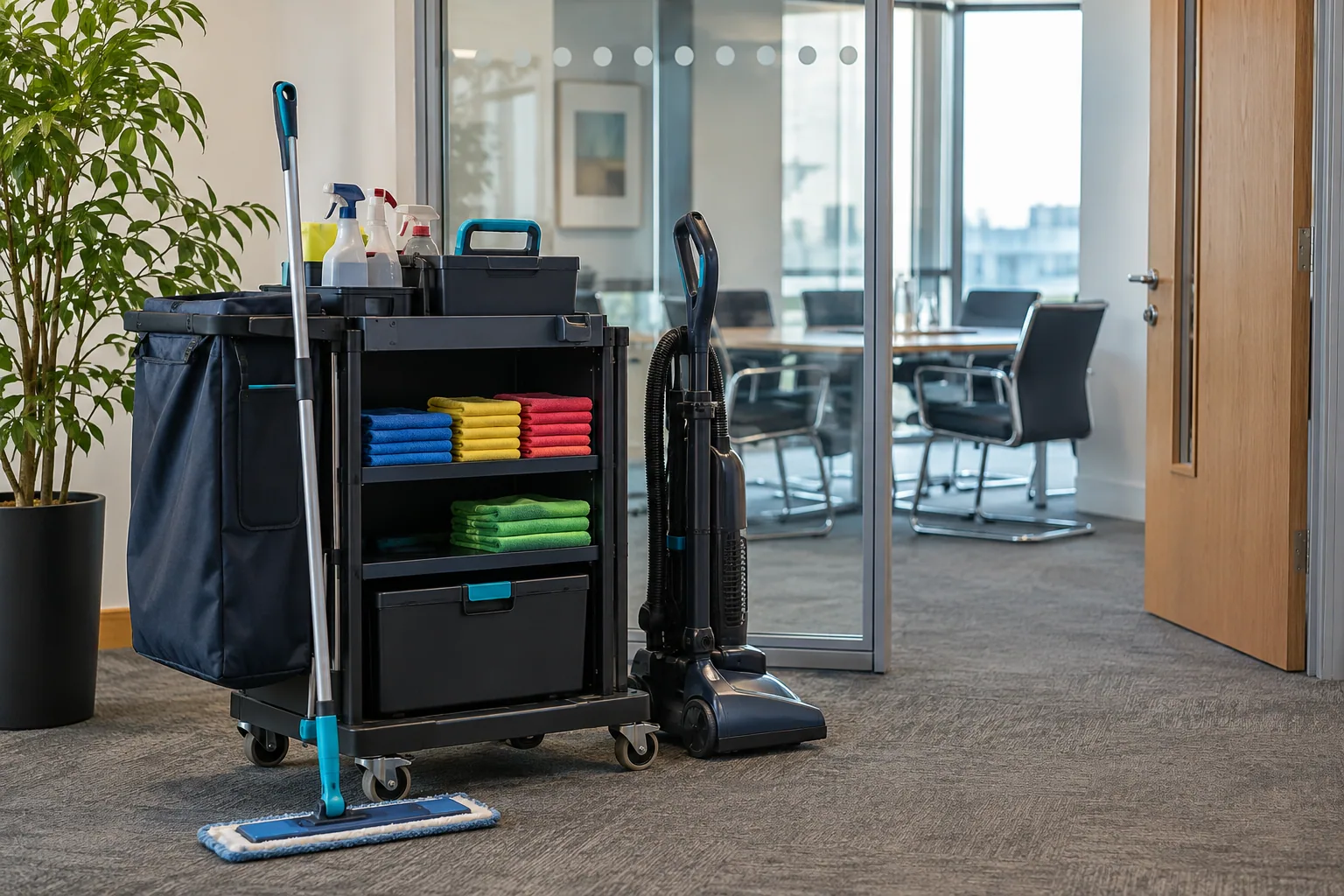
How machines and cloths are used, cleaned and maintained. Equipment that is not looked after stops working properly long before it stops working.
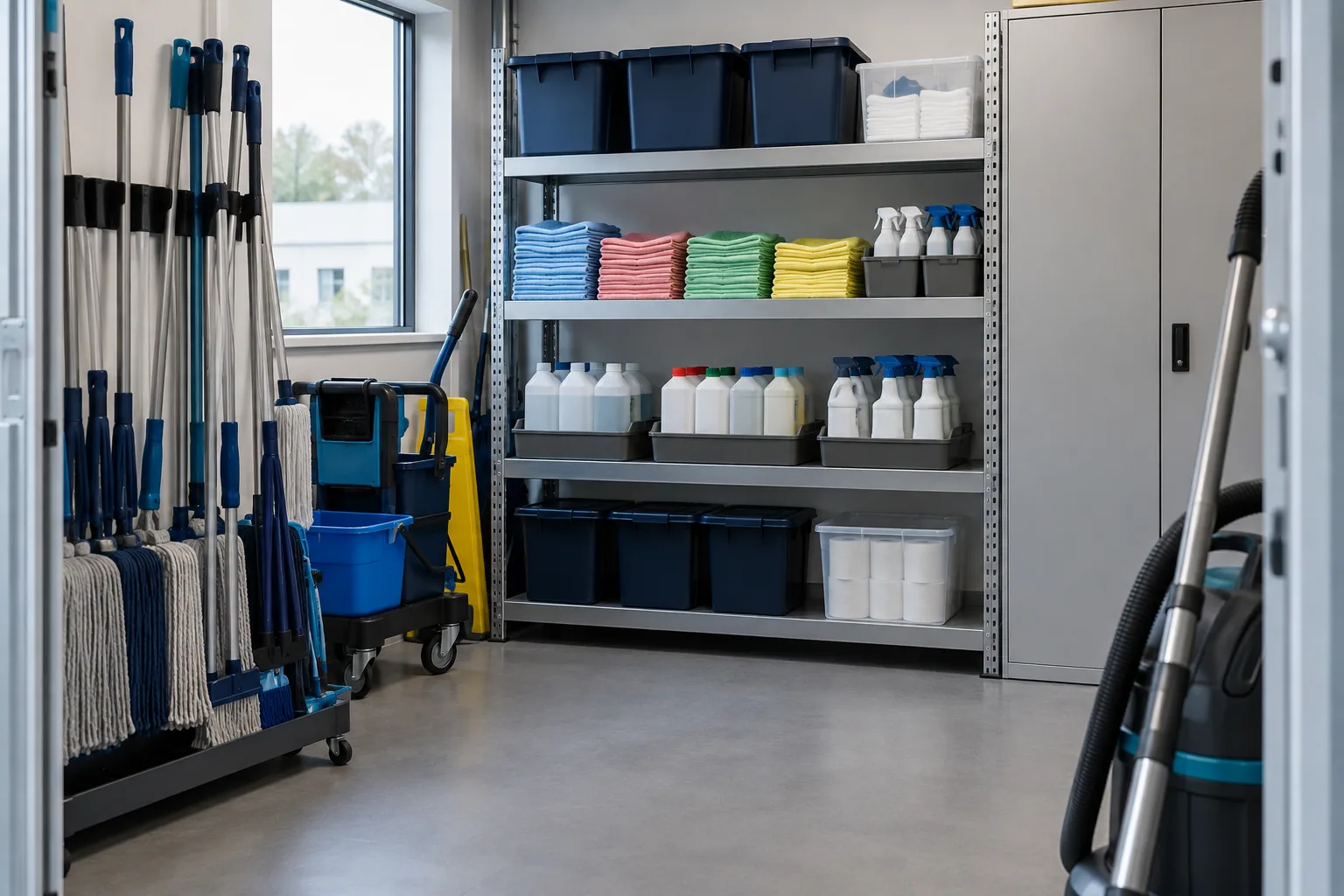
How products and equipment are stored on site: secured, labelled, separated, and out of the way of the people who use the building.
These are the foundations, not the whole of what a team learns on your building. Site-specific induction happens duringmobilisation.
Why a method at all
How the result gets verified is covered underquality assurance.
A site survey shows how the eight rules would work in your space — the order of work, where the pressure points are, and what a realistic plan looks like.