How Acies works

Cleaning run as a system, not an arrangement

Most cleaning contracts are an arrangement: a team turns up, does roughly what was agreed, and you find out how it went by looking. Acies runs the same six stages on every site, and each one produces something you can actually look at.

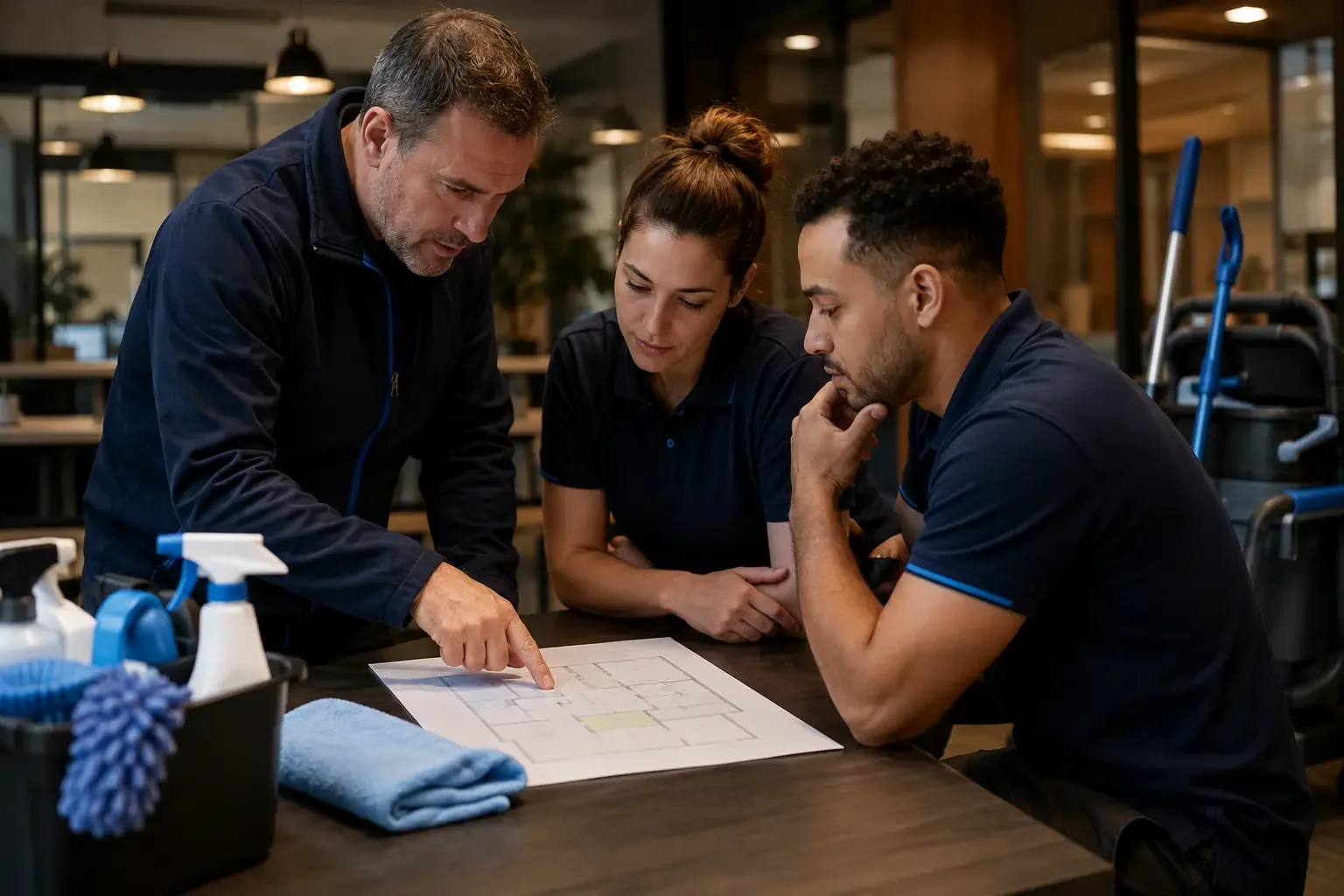
Concept scene of a cleaning team reviewing a site plan.

The short version

Six stages, on every site

Whether it is one floor or a portfolio. The detail below covers what happens at each stage and — just as importantly — what Acies needs from you.

  1. Survey the building

    We walk your site with you and record the pressure points.

  2. Write the site plan

    Every area gets a task list and a frequency, in writing.

  3. Train the team to one method

    Cleaners work to a fixed order of work, not their own habits.

  4. Check the result

    Routine checks compare the site against its own plan.

  5. Fix issues quickly

    One named contact, and a visible route from raised to closed.

  6. Tell you what you need to know

    What was checked, what was corrected, what needs a decision.

Before you commit

Working out what the building actually needs

Both of these happen before any contract. If Acies is not the right fit, this is where it becomes obvious — to both of us.

Stage 1

The survey

We walk the building with you, usually for about an hour. We look at the areas that get complained about, when they get busy, where the equipment and storage would go, and how people actually move through the space. We ask what previous contractors got wrong.

What you get
A written summary of what we found, including anything we think would be a problem.
What we need from you
An hour with someone who knows the building's real pressure points, and access to the areas a cleaner would need to reach.
Who owns it
Acies management

Stage 2

The site plan

The specification. Every area gets a task list and a frequency: what gets done, how often, and to what standard. It is the document both sides point at when there is a disagreement about whether something should have been done.

What you get
A task-and-frequency plan covering every area, and a price basis that maps onto it.
What we need from you
Confirmation of the areas in scope, any rooms with particular rules, and who signs the plan off.
Who owns it
Acies management
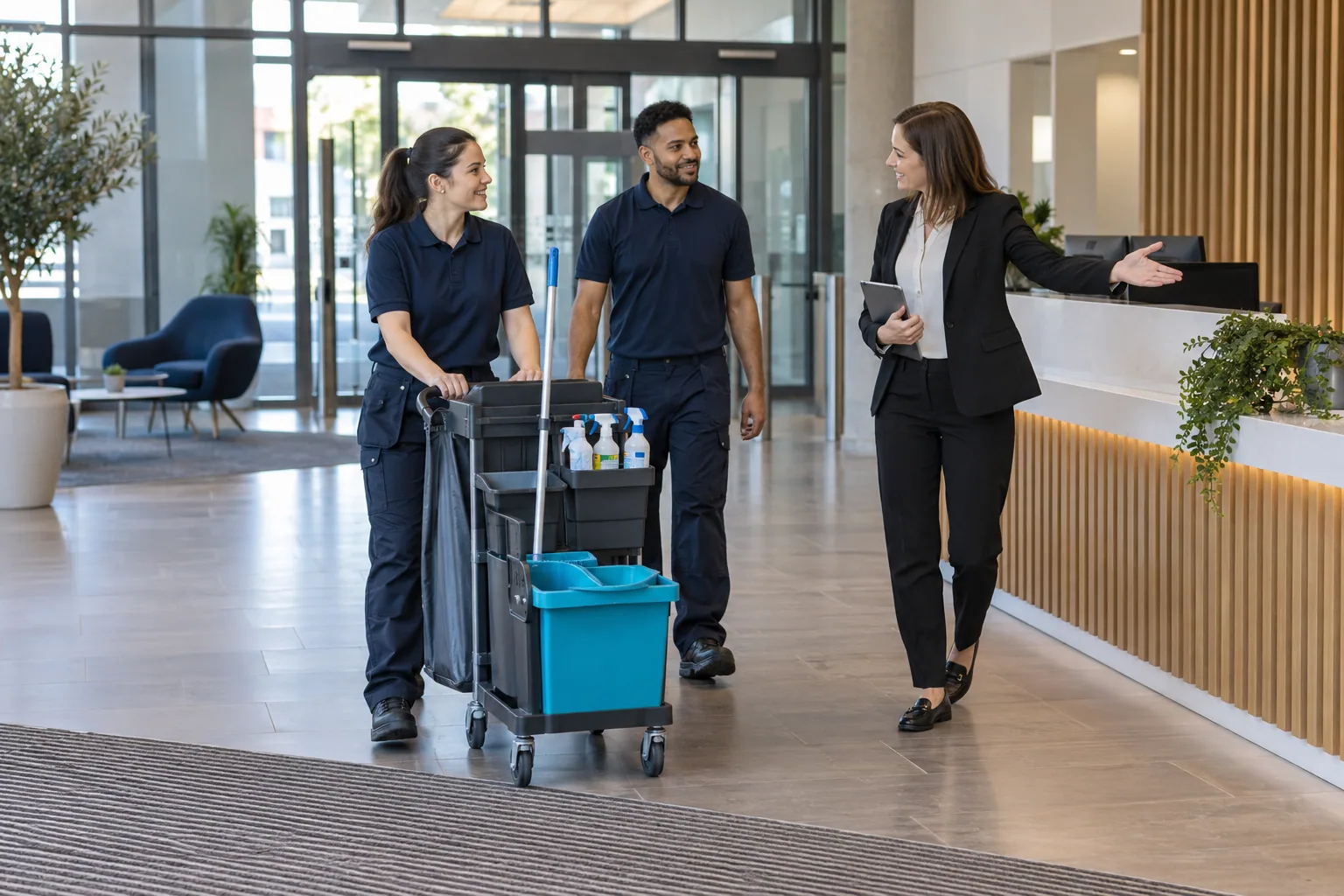
Concept scene of a cleaning team preparing to start at a workplace.

Getting started

Mobilisation

The stage most often underestimated. A good plan delivered by a team that has never seen your building is still a bad first month.

Taking the site on

Moving from a signed plan to a working service. Recruiting or transferring the team, inducting them on your site specifically, agreeing access and keys, setting up storage, and confirming the first weeks' checks are tighter than the steady state.

What you get
An agreed start date, a named contact, and confirmation of who will be on site and when.
What we need from you
Access arrangements, induction requirements, storage space, and any site rules your building manager enforces.
Who owns it
Acies management, with your site supervisor

Day to day

The part you should not have to think about

Stage 3

Delivery

The team works to the site plan using one method — a fixed order of work covering safety, sequence and the right tool for each surface. Task-based teamwork means the method travels with the team, so holiday and sickness cover follows the same plan as the regular crew.

What you get
A service that looks the same on a Tuesday in March as it does on a Friday in November.
What we need from you
Reliable access, and notice of anything that changes the building's pattern — a fit-out, a move, a busy period.
Who owns it
The cleaning team, led by your site supervisor

Stage 4

The checks

Routine quality checks compare the site against its own plan rather than against an opinion. They are part of the service, not a response to a complaint. The intent is that you hear about a slipping standard from us first.

What you get
A record of what was checked and what was corrected.
What we need from you
Nothing routinely. If you spot something before we do, tell us — that is useful information about the plan, not just the shift.
Who owns it
Your site supervisor, on every visit, reviewed by Acies management

Stage 5

Issues and follow-through

You raise an issue once, with one named contact, and can see where it got to. No repeating yourself to a supervisor, then an account manager, then a supervisor again.

What you get
A visible route from raised to closed, and an answer about what changed so it does not recur.
What we need from you
The detail while it is fresh — which area, roughly when, and what you expected instead.
Who owns it
Raised with your named contact; the fix is actioned by your site supervisor

The fixed order of work the teams follow is theAcies Method. How the checks are carried out and recorded is covered underquality assurance.

Over time

The parts that never stop

Communication

Reporting covers what was checked, what was corrected and anything that needs a decision from you. The aim is that you never have to ask how the cleaning is going, because you already know.

Owned by: Acies management, in a written report every month

Improvement

Buildings change. Headcount moves, a floor gets refitted, a meeting room becomes a studio. The site plan is reviewed against what the building actually is now, rather than what it was when the contract started.

Owned by: Acies management

The document stays current

When the plan changes, the written plan changes. A specification that no longer matches the building is how standards quietly drift.

Owned by: Acies management

What this is for

Why run it this way

Standards stop being an opinion

When the specification is written down by area and frequency, "is this clean enough" becomes a question with an answer.

Cover stops being a risk

The method travels with the team rather than living in one person's head, so absence does not become your problem.

You stop being the inspector

Checks happen whether or not you look. That is the whole point — it is the difference between a supplier and a system.

The fastest way to see how this would apply to your building is to let us walk it. Book a site survey and you will get the written plan whether or not you go on to work with Acies.

See what your site actually needs

A site survey takes about an hour. We walk the building with you, record the pressure points and give you a written plan with task frequencies — whether or not you go on to work with Acies.