
Washroom checks
Checked and restocked through the day rather than once, overnight. Running out of hand towels by two o'clock is the most common complaint in any busy building.
Daytime cleaning
A workplace cleaned only overnight looks its best before anyone arrives and its worst by mid-afternoon — which is when most people form their opinion of it. Daytime cover holds the standard through the hours that matter.
What it is
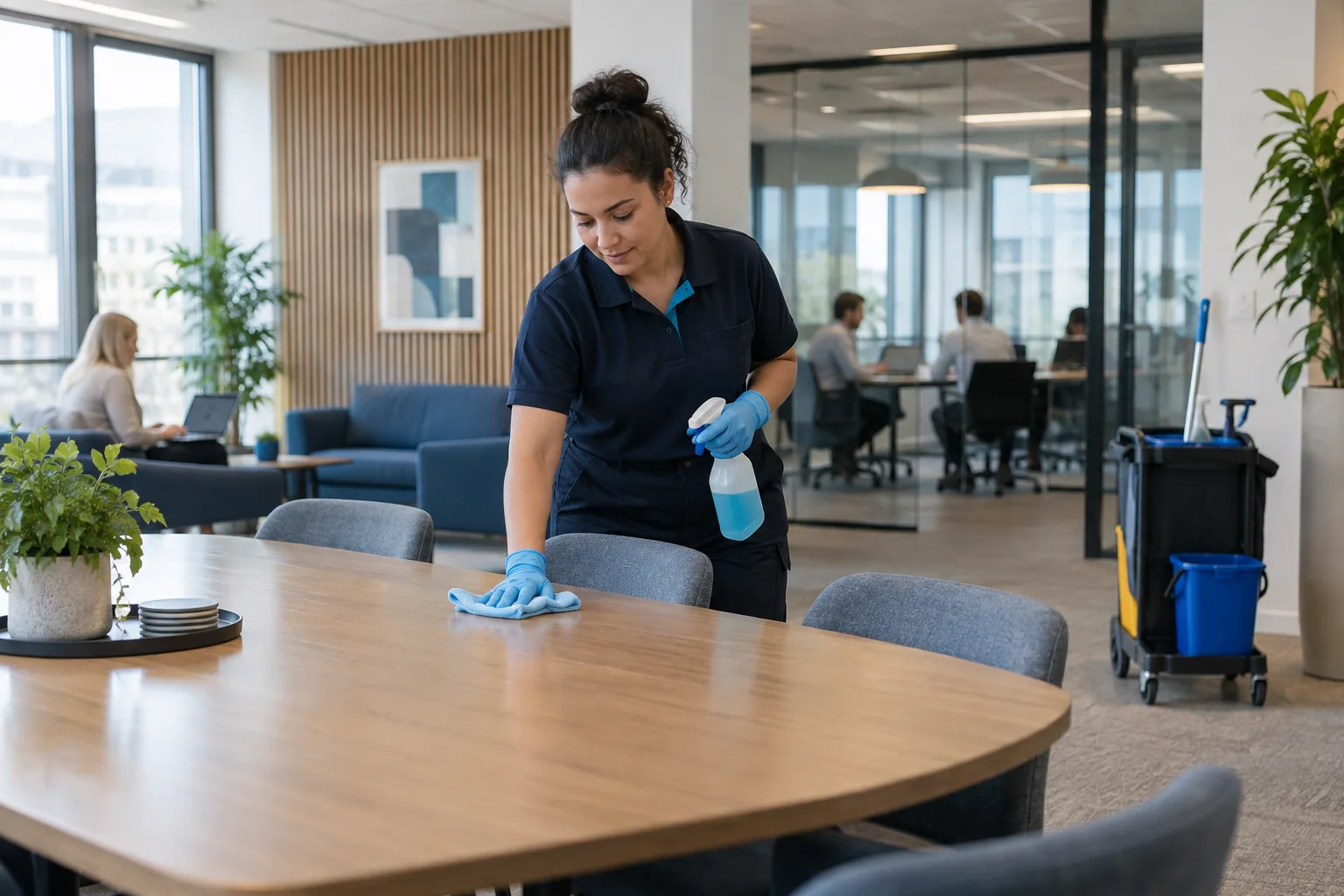
Daytime cover is not the evening clean repeated. The deep work still happens out of hours. Daytime is about keeping the areas that degrade fastest in a usable state while the building is full.
Working around people
Cleaning an occupied building is a different skill from cleaning an empty one. The work has to happen around meetings, calls and people trying to concentrate.
Whether it is worth it
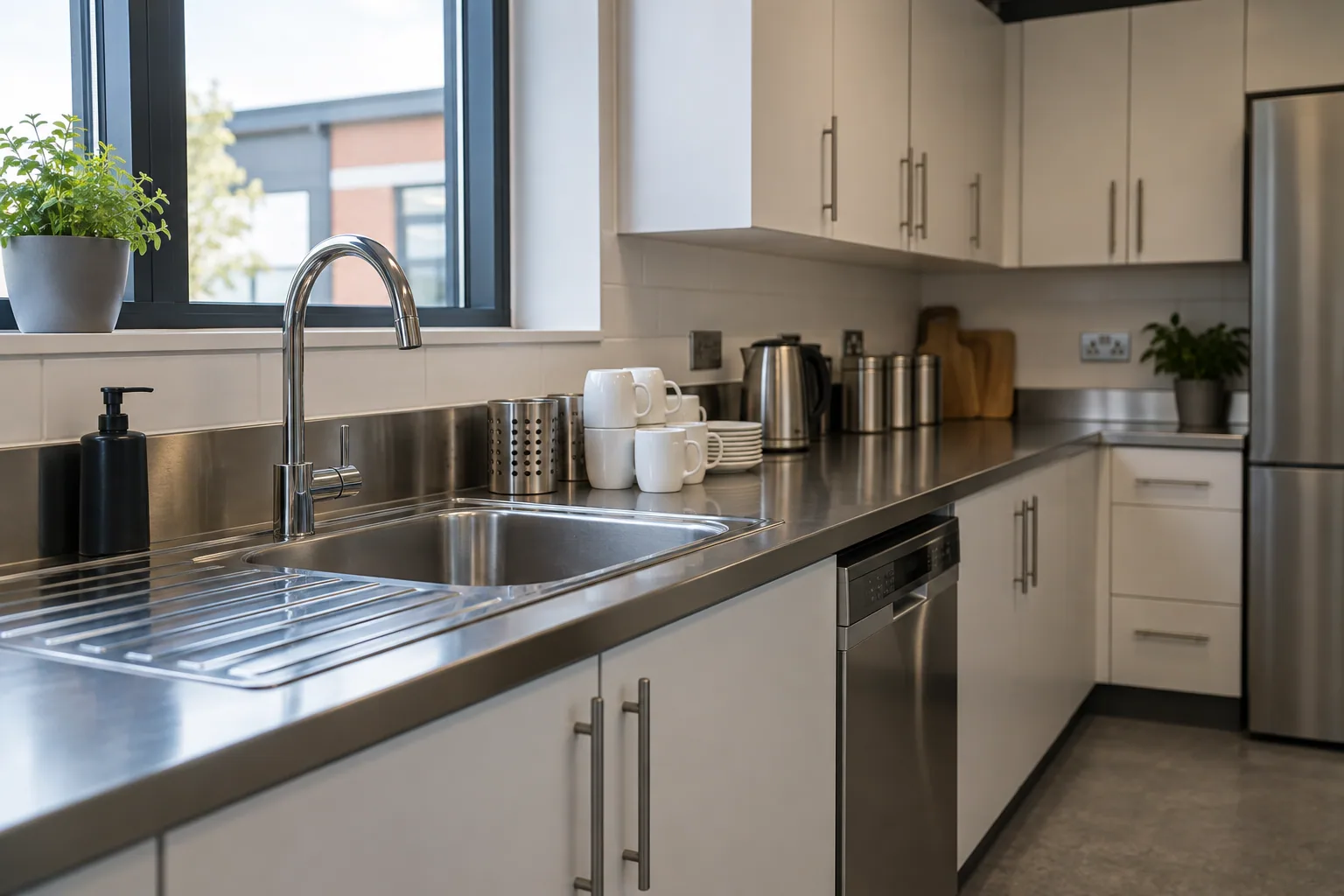
It is an additional cost, and it does not suit every building. It tends to be worth it where the problem is not the quality of the clean but how long it lasts.
How many hours, at what times, and covering what, is set by your site plan. A survey is where that gets worked out — seehow Acies works.
The standard
Acies specifies the result rather than the activity. "Mopped the floor" is an activity and proves nothing. The table below is what both sides measure against at an inspection — including what is reasonable to see between cleans, because a building in use is not a photograph.
| Area | Acceptable on completion | Acceptable between cleans | Unacceptable |
|---|---|---|---|
| Hard floors | Dry, uniform in appearance, and free from spillages, removable stains, superficial marks and loose debris. | Debris and spillages arising from normal use since the last clean. | Build-up of spillages, removable stains, scuff marks or debris. A non-uniform finish. |
| Soft floors | Free from visible loose debris, dust, fluff and lint, with an overall even appearance. | Debris arising from normal use since the last clean. | Build-up of debris, dust or lint, particularly around edges and the bases of furniture. |
| Vertical and high-level surfaces | Free from impacted debris, dust, cobwebs and removable marks. | Dust and marks arising from normal use since the last clean. | Build-up of dust or impacted debris, especially where vertical surfaces meet horizontal ones. |
| Furniture, fixtures and fittings | Dry, uniform in appearance, and free from impacted debris, dust, cobwebs and removable stains. | Debris, dust and marks arising from normal use since the last clean. | Build-up of dust or impacted debris. Removable stains and smears. |
| Sanitary fittings | Dry, odour free, uniform in appearance, and free from impacted debris, removable stains, scale and body fats. | Debris and residual odour arising from normal use since the last clean. | Build-up of impacted debris, fats or scale on any surface. Removable stains and smears. |
A site survey looks at when your building gets busy and which areas fall over first. If daytime cover would not earn its cost, we will say so.