
Checks are not a guarantee
Nothing catches every issue on every day. What a check system does is make a
repeated failure visible and fixable, rather than letting it become the normal
standard.
Quality assurance
In most cleaning contracts, quality control is whoever complains first. That makes the facilities manager the inspector, and it means problems are found by the people least able to fix them.
Acies checks its own work against the site plan, records what it finds, and tells you. The intention is simple: you hear about a slipping standard from us before you hear about it from a colleague.
What a check is
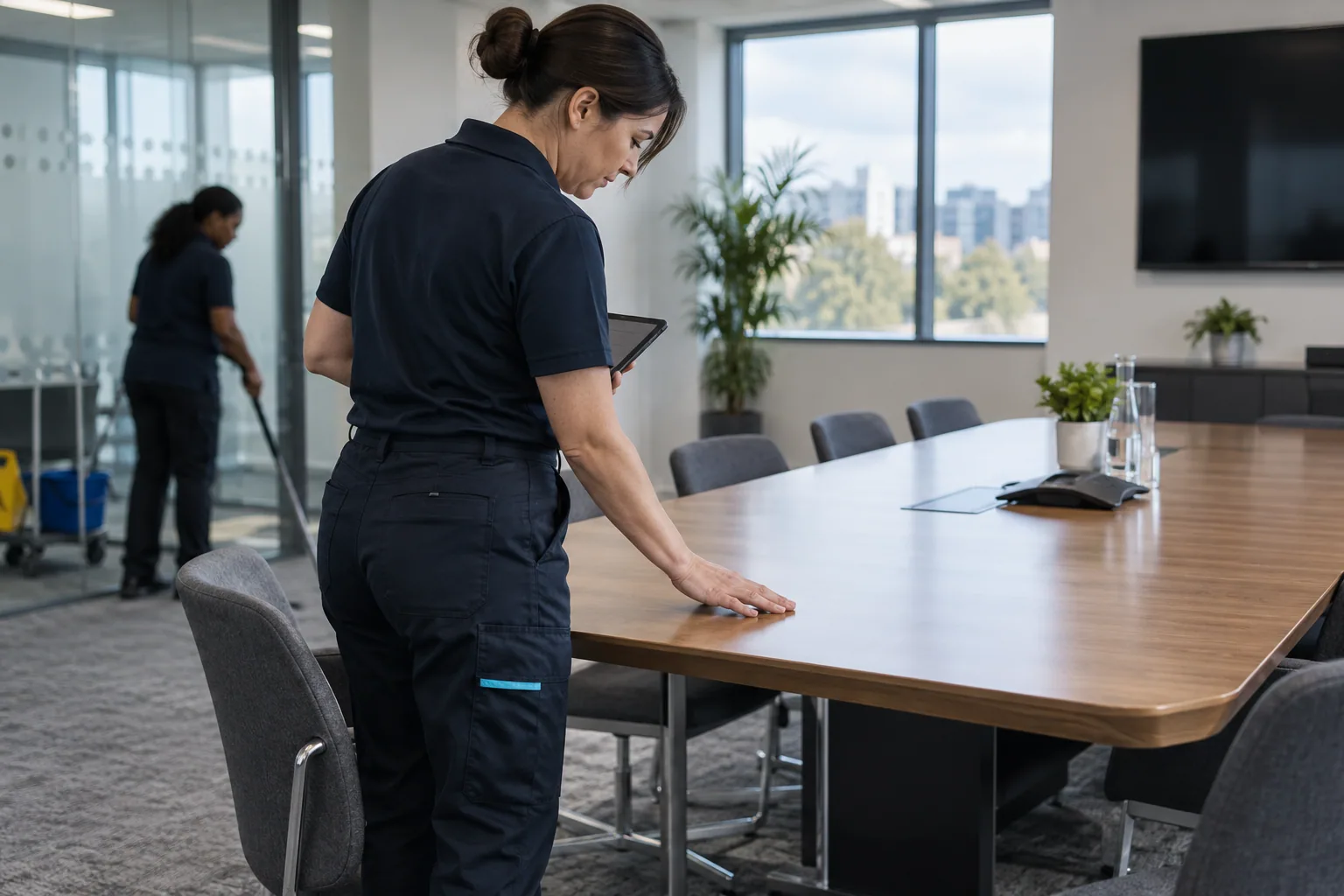
Your site supervisor checks the site on every visit, against its site plan, and records what they find digitally, as notes rather than a score.
A check is only useful if it is measured against something written down. That is why the site plan comes first — without it, "is this clean enough" has no answer anyone can point at.
01
A check compares the site to its own site plan — the written task-and-frequency specification agreed at the start. Not against a general impression of what clean looks like, and not against whatever the checker happens to notice.
02
Both the areas that met the standard and the ones that did not. A check that only records failures tells you nothing about whether the rest of the building is holding up.
03
A finding becomes a specific corrective action with someone responsible for closing it, not a note that the team should be more careful.
04
A recurring finding is usually a plan problem, not an effort problem: the frequency is wrong, the area changed use, or the time allowed was never realistic. That gets fixed in the plan.

What you see
The point of a report is not to prove work happened. It is to tell you the things you would otherwise have to go and find out.
You get a written report every month. What goes in it is agreed per site, because a single floor and a nine-building portfolio do not need the same thing.
When something is wrong
Raising an issue should cost you one message. You should not be repeating yourself to a supervisor, then an account manager, then a supervisor again — and you should not have to ask twice whether anything happened.
An issue you raise is recorded the same way a finding from our own check is: what it was, what was done, and whether the plan needs to change so it does not recur. If the same thing comes back a third time, the plan is wrong and we will say so.
The stage-by-stage version of this is onhow Acies works.

What this is not
A site survey produces the written plan the checks are measured against. You keep the plan whether or not you go on to work with Acies.